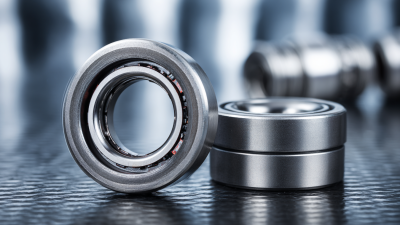
In the world of mechanical engineering, things are always changing, and having parts that boost performance and last longer is kinda crucial. One such part is the needle bearing — you know, the one with the long, cylinder-shaped rollers? These bearings are built to handle pretty heavy loads without taking up too much space, which makes them perfect when you're working with limited room. I read a recent market report by ResearchAndMarkets that says the global needle bearing market was around USD 2.1 billion in 2022, and it's expected to grow at about 5.2% annually over the next five years. That growth mainly comes from big industries like automotive, aerospace, and industrial machinery, where reliability and efficiency are absolutely key.
What makes needle bearings special is their design — they have more contact surface area, which helps cut down on friction and wear. They can handle both radial and axial loads without requiring a ton of space, so they’re pretty much the go-to choice for engineers and manufacturers these days. And with recent advances in materials science, these bearings are even better now — lasting longer and performing more reliably in different setups. As companies keep searching for ways to improve performance without lots of extra maintenance costs, choosing the right needle bearings is more important than ever. This article rounds up the ten best needle bearings out there, all promising to give you better durability and performance, so your projects stay on point and trustworthy.

Understanding Needle Bearings: Definition and Applications
Needle bearings are specialized roller bearings that employ slender, elongated rollers, resembling needles, to support radial loads. Their unique design allows for a larger surface area contact with the raceway, reducing friction and improving load capacity compared to traditional spherical roller bearings. This makes needle bearings particularly suitable for applications where space is limited but high load efficiency is crucial, such as in automotive transmissions, industrial machinery, and various types of actuators.
Furthermore, needle bearings excel in high-speed operations due to their lightweight construction and minimal friction, making them ideal for applications requiring precise movement and responsiveness. They are commonly used in sectors such as aerospace, robotics, and medical devices, where both performance and durability are of utmost importance.
In addition to their ability to handle heavy loads, needle bearings also contribute to design flexibility, allowing engineers to create more compact systems without sacrificing reliability or performance.
Key Advantages of Using Needle Bearings over Traditional Bearings
Needle bearings offer several key advantages over traditional bearings, primarily due to their unique design that features long, thin rollers. This configuration allows needle bearings to have a higher load-carrying capacity while occupying less radial space. The reduced cross-section leads to less weight in machinery, which can enhance overall efficiency and performance. This is particularly beneficial in applications where space and weight are critical, such as in automotive and aerospace industries.
Another significant advantage is the ability of needle bearings to reduce friction and improve rotational efficiency. The elongated rollers help distribute loads over a larger surface area, leading to minimized contact stress. As a result, needle bearings generally demonstrate lower heat generation and wear characteristics compared to conventional ball or roller bearings. This not only prolongs the lifespan of the bearings but also decreases the maintenance needs, making them a cost-effective choice in the long run. Consequently, industries seeking high performance and durability are increasingly turning to needle bearings as a reliable solution for their mechanical systems.
Top 10 Needle Bearings: A Comparative Analysis for Performance
When selecting needle bearings for optimal performance and durability, it's essential to analyze their specifications and how they match your application requirements. Needle bearings are known for their high load capacity in a compact design, making them ideal for various mechanical systems. This comparative analysis will highlight the key features that influence performance, such as material composition, lubrication, and design configurations, which play a crucial role in their functionality and longevity.
The choice of material is paramount; high-quality alloys and heat-treated steels generally offer superior resistance to wear and deformation. Additionally, the bearing's lubrication system significantly affects its operational efficiency. Bearings that utilize advanced lubrication solutions can reduce friction and enhance heat dissipation, ultimately leading to improved performance.
Furthermore, the design of the needle bearings, including the arrangement and size of the needles, influences their load-bearing capabilities, further affecting overall system durability. Understanding these factors will guide you in selecting the most suitable needle bearings to ensure sustained performance in your specific applications.
Material Choices: How to Select the Best Needle Bearing for Durability
When selecting the best needle bearings for improved performance and durability, material choice plays a crucial role in maximizing their lifespan and efficiency. Needle bearings are often subjected to high loads and varying environmental conditions, so understanding the materials available is essential. Common materials include steel, polymer, and bronze.
 Steel needle bearings offer excellent strength and wear resistance but may require lubrication to prevent rust and corrosion. Polymer bearings, on the other hand, are lightweight and resistant to chemical damage, making them suitable for applications where moisture and chemicals are a concern. Finally, bronze provides good strength and durability while also possessing self-lubricating properties, which can reduce maintenance needs in friction-heavy applications.
Another critical factor in material selection is thermal stability. The operating temperature range of the application can impact the performance of the bearing significantly. For high-temperature environments, materials that can maintain their structural integrity, such as specialized heat-treated alloys or ceramics, are preferable. Additionally, considering factors like load capacity, operating speed, and the presence of contaminants in the environment will influence the choice of material and bearing design. By carefully analyzing these aspects, one can select the most suitable needle bearing that will enhance both performance and durability for specific applications.
Installation Tips: Best Practices for Maximizing Needle Bearing Life
Proper installation of needle bearings is crucial for ensuring optimal performance and longevity. Research from the American Society of Mechanical Engineers indicates that improper installation can lead to a staggering 30% increase in failure rates of needle bearings. To minimize such risks, it is imperative to follow best practices during installation. First, ensure that the bearing and housing surfaces are clean and free from any debris or contaminants. Utilizing appropriate lubrication before installation can dramatically reduce friction and wear, enhancing the bearing's life expectancy.
Moreover, applying a uniform amount of force during the installation process is key. As recommended by leading engineering manuals, using a specialized bearing press can help achieve even loading, reducing the likelihood of damage to the bearing structure. Additionally, monitoring the operating temperature is essential; the ideal temperature range for needle bearings is typically between 60°F and 160°F. Excessive heat can lead to lubricant breakdown, resulting in increased friction and potential failure. Following these installation tips can lead to improved performance and durability, ensuring that needle bearings function effectively in their designated applications.
Maintenance Strategies to Enhance Needle Bearing Performance
Effective maintenance strategies are crucial for enhancing the performance and durability of needle bearings. Regular lubrication is one of the most important practices for ensuring that the bearings operate smoothly without excessive wear. Using the right type of lubricant not only reduces friction but also helps in dissipating heat, which can significantly extend the life of the bearings. It is essential to follow manufacturer guidelines regarding the frequency and type of lubrication to prevent contamination and degradation of the bearing material.
Another critical maintenance strategy involves monitoring the alignment and installation of the needle bearings. Misalignment can lead to uneven wear and premature failure. Regular inspections should be conducted to check for signs of wear, such as noise, vibration, or temperature abnormalities. Additionally, implementing a system for timely replacement of worn-out bearings can prevent potential operational disruptions and costly downtimes. Maintaining a clean working environment also plays a significant role in preserving bearing integrity, as contaminants can lead to serious damage over time. By adopting these practices, users can significantly enhance the performance and longevity of needle bearings in various applications.
10 Best Needle Bearings for Improved Performance and Durability
| Model |
Load Capacity (N) |
Size (mm) |
Material |
Max RPM |
Lubrication Type |
| NBR 123 |
800 |
10 x 20 |
Steel |
15000 |
Grease |
| NBR 456 |
1000 |
15 x 25 |
Stainless Steel |
12000 |
Oil |
| NBR 789 |
1200 |
20 x 30 |
Brass |
13000 |
Grease |
| NBR 101 |
900 |
18 x 28 |
Steel |
14500 |
Oil |
| NBR 202 |
1100 |
12 x 22 |
Aluminum |
11000 |
Grease |
Common Issues and Troubleshooting for Needle Bearings in Use
Needle bearings, while effective in reducing friction and improving performance, can encounter several common issues that may affect their functionality and longevity.
One prevalent problem is insufficient lubrication, which can lead to increased wear and tear. When lubricant levels drop, the needle rollers may not be adequately greased, resulting in metal-to-metal contact, overheating, and eventual failure.
Regular maintenance and the proper selection of lubricant are essential in preventing this issue and ensuring smooth operation.
Another common issue is misalignment during installation. If needle bearings are not correctly aligned with the shaft and housing, it can cause uneven loading, leading to premature wear and potential damage to the bearing surfaces.
This can be exacerbated by external factors such as vibration or shock loads, which further contribute to misalignment over time.
To troubleshoot this problem, it is crucial to ensure precise alignment during installation and to monitor for signs of misalignment throughout the bearing's operational life.
Regular inspection and adjustment can alleviate these concerns and enhance the overall durability of needle bearings.
FAQS
: Needle bearings are specialized roller bearings that use slender, elongated rollers to support radial loads, offering a larger surface area contact with the raceway. This design reduces friction and improves load capacity compared to traditional spherical roller bearings.
Needle bearings provide a higher load-carrying capacity while occupying less radial space, which enhances overall efficiency and performance. They also reduce friction, leading to lower heat generation and extended lifespan, making them a cost-effective choice.
Needle bearings are commonly utilized in applications where space is limited but high load efficiency is crucial, such as automotive transmissions, industrial machinery, aerospace, robotics, and medical devices.
Needle bearings excel in high-speed operations due to their lightweight construction and minimal friction, making them ideal for applications that require precise movement and responsiveness.
Key factors to consider include material composition, lubrication methods, and design configurations, all of which influence performance, load-bearing capabilities, and overall durability.
An advanced lubrication system can significantly reduce friction and enhance heat dissipation, leading to improved operational efficiency and longevity of the needle bearings.
High-quality needle bearings are often made from durable alloys and heat-treated steels, which provide superior resistance to wear and deformation.
Yes, needle bearings allow for more compact designs without sacrificing reliability or performance, enabling engineers to create space-efficient mechanical systems.
The lower heat generation and wear characteristics of needle bearings compared to conventional bearings result in prolonged lifespan and reduced maintenance requirements.
Industries are opting for needle bearings due to their high performance, durability, and cost-effectiveness, making them a reliable solution for various mechanical systems.
Conclusion
Needle bearings are specialized rolling elements designed to accommodate heavy loads while maintaining a compact design. Their elongated shape allows for a larger surface area in contact with shaft surfaces, making them ideal for applications where space is limited. This article delves into the essential aspects of needle bearings, highlighting their advantages over traditional bearings, such as enhanced performance and durability.
Furthermore, it offers a comparative analysis of the top 10 needle bearings, focusing on material choices to ensure longevity and resilience. Effective installation tips and maintenance strategies are provided to maximize their lifespan, along with troubleshooting advice for common issues encountered in use. By understanding these factors, users can significantly improve the reliability and efficiency of their needle bearing applications.